

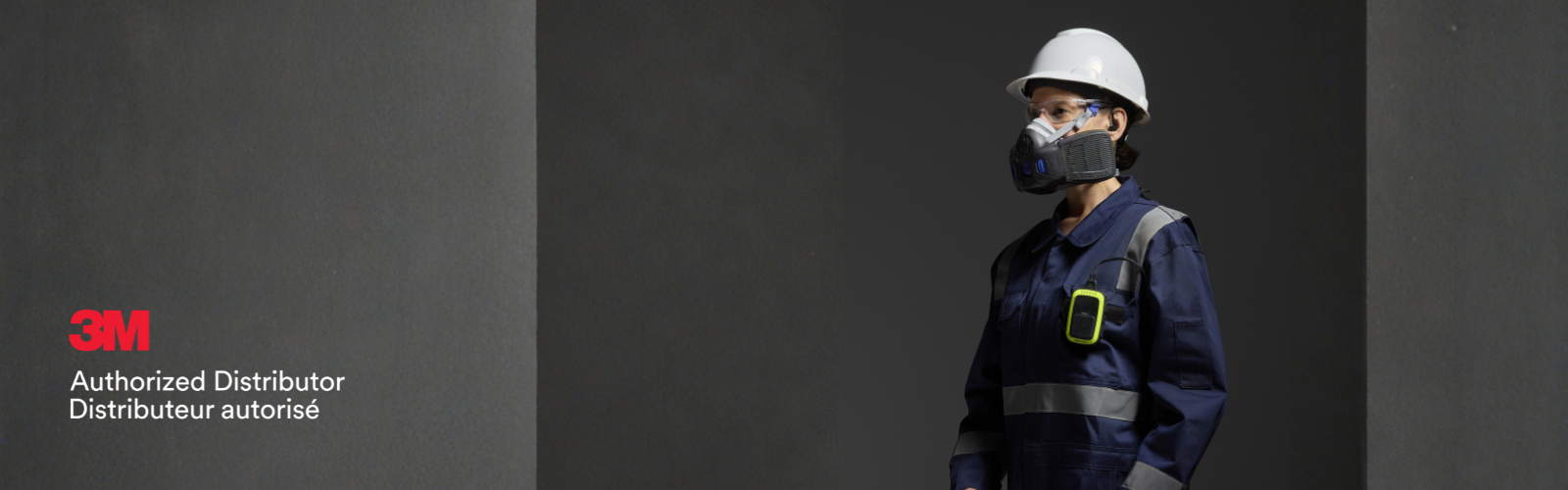
In Mining, Does Your PPE Really Work Together?
In a mine, hazards rarely occur one at a time. A worker may be exposed simultaneously to airborne contaminants, high noise levels, flying particles, moving objects, low visibility or fall hazards. This often means wearing several types of personal protective equipment (PPE) at once.
The key question is not simply whether each piece of PPE provides the required protection. Safety teams must also ask: Does all this equipment continue to protect the worker effectively when worn together?
The short answer is that a PPE system is effective when each component is selected for the identified hazards, properly fitted to the worker and assessed as part of the complete combination that will actually be worn. If one piece of equipment shifts, lifts or compresses another, overall protection may be reduced, even when every individual product meets the applicable requirements.
This approach is central to the 3M Integrated Protection Program and focuses on five factors: comfort, fit, compatibility, communication and performance.
Why Is PPE Compatibility Especially Important in Mining?
Mining operations involve a wide range of environments and tasks, including drilling, blasting, crushing, conveying, mechanical maintenance, welding, work at height, confined space entry and working near heavy mobile equipment. Hazards, and the PPE required to address them, can therefore change from one area or task to another.
The challenge is that one piece of PPE can affect the performance of another. For example:
- The temples of safety glasses can create gaps beneath the cushions of earmuffs.
- Improperly positioned eyewear can interfere with a respirator’s face seal.
- A safety helmet, cap lamp, face shield and hearing protection may compete for the same attachment points.
- Fogged eyewear may encourage a worker to remove it or reposition a respirator.
- A communication system that is difficult to use with respiratory or hearing protection may prompt a worker to remove PPE temporarily to speak.
- Heavy clothing, protective coveralls or a tool belt may change the fit of a fall protection harness.
These interactions can create an invisible weak point. The equipment may appear to be worn correctly, while a gap, pressure point, shift in position or communication barrier reduces actual protection or wear time.
What Is an Integrated Personal Protective Equipment System?
An integrated PPE system is a combination of equipment selected and assessed as a complete system for a specific task, work environment and worker. It does not simply mean purchasing every item from the same manufacturer.
In other words, overall protection is not automatically equal to the sum of the ratings shown on each product. It also depends on how the complete PPE combination performs under real working conditions.
Why Does PPE Wear Time Affect Actual Protection?
PPE only protects workers when it is worn properly throughout the entire exposure period. Wear time is the percentage of time a worker actually wears the required PPE compared with the total amount of time the worker is exposed to the hazard.
In its Integrated Protection Program, 3M illustrates that a half facepiece respirator with an assigned protection factor of 10 may provide an effective protection factor of approximately 7 when it is worn for only 95% of the exposure period. During an eight-hour shift, that difference can represent just a few minutes without protection each hour.
The same principle applies to hearing protection. According to the example provided by 3M, hearing protection that provides 30 dB of noise reduction when worn for eight hours may provide an effective reduction of only about 9 dB if it is removed for one hour.
To explore this principle further, read our article on the science of fit and the importance of consistent PPE use.
Which 3M PPE Can Be Part of an Integrated Mining Safety System?
The specific selection must always be based on a hazard assessment and the requirements applicable to the mine site. Depending on the task, the following 3M equipment categories may be part of an integrated PPE system for mining operations.
Respiratory Protection
Rock dust, respirable crystalline silica, welding fumes and certain gases or vapours may require different types of respiratory protection. The 3M portfolio includes:
- Disposable respirators for certain particulates
- Half facepiece respirators
- Filters and cartridges selected according to the contaminants and their concentrations
- Powered air-purifying respirators (PAPRs)
- Supplied-air respirator systems
View 3M respiratory protection
Eye and Face Protection
3M safety helmets, protective eyewear and face shields can help protect workers against certain impacts, flying objects, dust, splashes and optical radiation, depending on the model selected.
When assessing a complete PPE combination, check that:
- The eyewear provides adequate coverage without compromising the respirator seal.
- It remains stable beneath the safety helmet and hearing protection.
- The face shield can be lowered without coming into contact with the respirator.
- Fogging does not obstruct vision or encourage the worker to remove the equipment.
View 3M eye and face protection
Hearing Protection and Communication Solutions
3M earplugs, earmuffs and 3M™ PELTOR™ communication solutions can address a variety of hearing protection and communication needs.
In mining, compatibility involves more than noise attenuation. Workers may also need to hear an alarm, an approaching vehicle, a change in the sound of a machine or instructions from a co-worker. Certain PELTOR solutions provide controlled ambient listening or two-way communication to help workers communicate without removing their hearing protection.
Fall Protection and Confined Space Solutions
3M™ DBI-SALA™ solutions include full-body harnesses, lanyards, self-retracting lifelines, anchorage connectors, lifeline systems, access equipment, confined space retrieval systems, rescue and descent solutions, and tool tethering systems designed to help prevent dropped objects.
A fall protection system never consists of a harness alone. The anchorage, connectors, connecting device, available clearance, swing-fall risk and rescue plan must all work together. The harness should also be assessed with the other equipment and clothing the worker will wear.
How Can You Confirm That Multiple Types of PPE Work Together?
1. Identify the Hazards and Existing Controls
Assess the entire task rather than a single hazard. Consider airborne contaminants, noise, particles, impacts, temperatures, visibility, work at height, confined spaces and skin exposure.
2. Document the Actual Conditions of Use
Consider heat, humidity, dust, available space, task duration, worker movement, communication needs, mobile equipment, intrinsic safety requirements and rescue needs. A combination that is suitable in a maintenance shop may not be appropriate underground or in a restricted space.
3. Select the Complete PPE Combination
Choose each component for the identified hazard, but also examine where it contacts or interacts with other PPE. Review the instructions, approved accessories, mounting options and limitations of use.
4. Validate the Fit of the Complete Combination
Perform the appropriate tests and assessments while the worker is wearing all required PPE together. Observe the worker while completing movements representative of the task, such as looking up and down, bending, crouching, communicating, handling tools and entering a restricted space.
Repeat the assessment whenever a product, accessory, task or working condition changes. Worker feedback is especially valuable for identifying problems that appear only after several hours of use.
Frequently Asked Questions About Mining PPE
Why Should Different Types of PPE Be Tested Together?
PPE should be tested together because one piece of equipment can affect the fit or performance of another. Safety glasses, for example, may create a gap beneath an earmuff cushion or interfere with a respirator seal. Assessing the complete combination helps identify these interactions before the worker is exposed to the hazard.
What PPE Is Commonly Used in Mining?
Depending on the hazards, mining workers may require respiratory, hearing, eye, face and head protection, fall protection systems, protective or high-visibility clothing, welding PPE, protective communication equipment, and confined space access or retrieval systems.
Can the Temples of Safety Glasses Reduce the Effectiveness of Earmuffs?
Yes. Safety glass temples may reduce noise attenuation if their thickness or position creates a gap beneath the earmuff cushions. The shape of the temples, earmuff pressure, the worker’s anatomy and other accessories can all affect the result. Hearing protector fit testing can help measure the protection the individual worker actually receives.
How Can You Tell Whether a Respirator Is Compatible With Other PPE?
Confirm that the respirator maintains its face seal when worn with the required eyewear, safety helmet, face shield and other equipment. For a tight-fitting respirator, fit testing should be performed with the PPE that will be worn at the same time, in accordance with applicable requirements and the manufacturer’s instructions.
Need help evaluating or simplifying PPE systems for your mining operations? SPI experts can help you assess your hazards, select appropriate 3M solutions and validate how the equipment works together in your workplace.
CTA: Talk to an SPI expert
https://www.spi.com/about-us-spi/contact-us
