

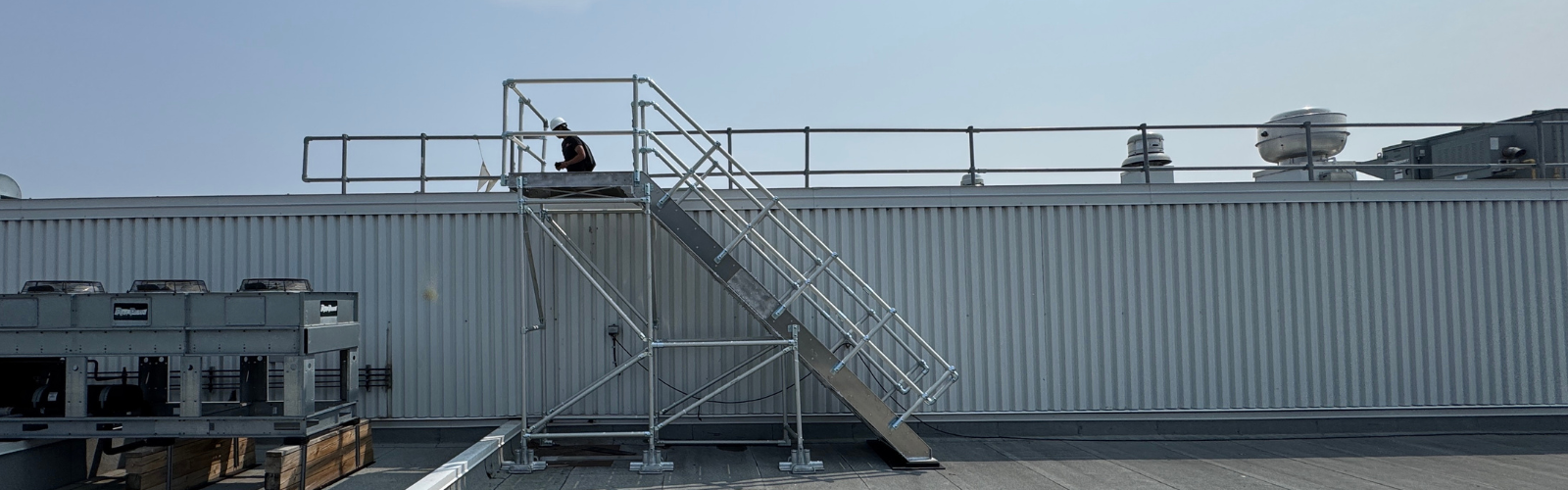
The Different Types of Passive Fall Protection Systems
Working at height is common across many industries, including construction, industrial maintenance, energy, telecommunications and manufacturing. Despite improvements in prevention, falls remain one of the leading causes of serious injuries and workplace fatalities in Canada.
To reduce these risks, organizations must implement protection measures adapted to their working conditions. Among the most effective solutions are passive fall protection systems, which help protect workers without requiring any active intervention from them.
These systems play a central role in an effective prevention strategy because they eliminate or control hazards directly at the source.
What Is a Passive Fall Protection System?
A passive fall protection system is a collective safety measure designed to prevent a fall or limit its consequences without requiring the worker to tie off or use specific personal equipment.
Unlike active systems such as harnesses and lifelines, passive systems do not rely on worker behaviour. Once properly installed, they provide continuous protection to everyone present in the work area.
In many cases, regulations and occupational health and safety best practices recommend prioritizing collective protection measures before personal protective equipment, as they significantly reduce the risk of human error.
Passive systems are particularly useful in situations where:
- multiple workers are exposed to the same hazard
- tasks are repetitive
- using an active system would be complex or impractical.
The Main Types of Passive Fall Protection Systems
Several solutions can be implemented to secure work areas at height. The choice of system generally depends on the work environment, the duration of the work and the nature of the hazards present.
Guardrails
Guardrails are one of the most commonly used passive systems for preventing falls. They are installed along the edges of platforms, roofs, mezzanines, walkways or any elevated surface presenting a fall hazard.
A compliant guardrail system generally includes three main components:
- A top rail, which acts as the primary barrier
- A mid-rail, which prevents a worker from slipping under the top rail
- A toe board, which helps prevent tools or materials from falling
Guardrails provide immediate and continuous protection. When properly installed, they prevent unintentional access to exposed edges and significantly reduce the risk of accidents.
They are particularly effective in environments where workers frequently move near exposed edges.
Floor and Opening Covers
Openings in floors, roofs or platforms represent a significant fall hazard. These openings may exist to allow access to equipment, for piping or duct passage, or during construction work.
Protective covers, grates or plates can be used to secure these areas by preventing workers or objects from falling through the opening.
To be effective, these devices must:
- be securely fastened or properly secured
- be capable of supporting expected loads
- be clearly identified to prevent accidental removal.
When properly installed, these systems can almost completely eliminate the hazard associated with an opening.
Safety Nets
Safety nets are often used in construction projects or in situations where installing guardrails is not immediately possible.
Unlike other passive systems that prevent a fall, safety nets are designed to catch a worker in the event of a fall and reduce the fall distance and impact.
They are typically installed below elevated work areas to create a protective surface capable of absorbing the energy of a fall.
Safety nets must be:
- properly positioned beneath the work area
- inspected regularly
- capable of supporting expected loads.
Although they do not always replace other prevention measures, they are an effective solution for reducing the severity of accidents when other systems cannot be used.
Physical Barriers, Access Restriction Systems and Warning Lines
Physical barriers, safety gates and access restriction systems help prevent entry into areas where a fall hazard exists.
They are commonly used to secure:
- temporary openings
- roof edges
- loading docks
- maintenance areas.
These systems help control worker movement and limit exposure to hazardous areas. They are particularly useful in industrial environments where certain zones must remain secured at all times.
The Advantages of Passive Systems
The use of passive fall protection systems offers several key advantages.
First, they provide collective protection that does not depend on worker vigilance or training. This significantly reduces risks associated with human error.
Second, they protect multiple workers at the same time, which is especially important in environments where large teams are working.
Finally, these systems help improve overall site organization by clearly structuring safe zones and hazard zones within the workplace.
A Complementary Approach with Active Systems
Although passive systems often represent the first line of defense against falls, they are not always sufficient on their own.
In some situations, such as temporary work, roof interventions or access to complex structures, it may be necessary to use active fall protection systems, such as harnesses, lifelines or fall arrest systems.
The most effective strategy is usually to combine multiple prevention measures in order to create a safer work environment.
Implementing the right fall protection solutions requires a clear understanding of the hazards present in your work environment. Our experts can help you assess risks and identify the most appropriate systems for your operations.
