

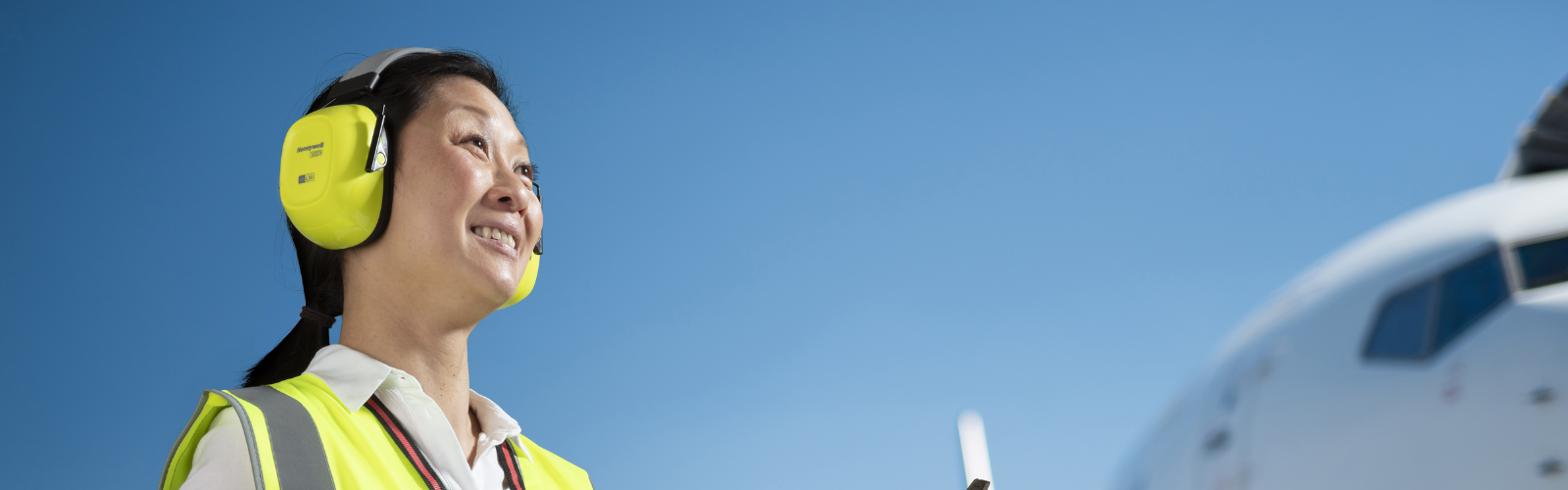
Your Questions on Hearing Protection Answered
Prolonged exposure to noise can cause irreversible hearing loss. At noise levels of 85 dB and above, hearing protection is required. Choosing the right hearing protection device, ensuring proper fit, and understanding ratings such as NRR (Noise Reduction Rating) are essential to effectively protect workers.
Do you work in a noisy environment? If so, you probably have some questions about hearing protection, standards, and requirements.
Common questions workers often ask include:
- How many decibels are considered safe?
- Is 70 dB dangerous?
- What does NRR mean on hearing protection devices?
These are important questions, as noise-related hearing loss develops gradually and often without warning. The good news is that our hearing protection experts are here to give you the right answer.
Why is hearing protection important?
Many industrial work environments feature dangerously high noise levels that could ultimately put your hearing at risk.
Hearing protection devices (HPDs) will help reduce your noise exposure, thus lowering the risk of permanent hearing loss.
Permanent hearing loss tends to develop over time and can harm your quality of life by making it difficult to communicate with your coworkers and your loved ones.
At what noise level is hearing protection required?
Most employers will provide hearing protection devices when the noise levels meet or exceed 85 dBA (decibels). Exposure to noise levels over 85 decibels may lead to hearing damage. In Canada, the daily noise exposure limit is generally set at 85 dBA, in accordance with CSA Standard Z94.2.
Safe noise level guidelines:
- 70 dB or less – generally considered safe for prolonged exposure
- 85 dB or more – hearing protection required
- 100 dB or more – high risk of rapid hearing damage
- 120 dB – threshold of pain
Good to know− Here are some examples of the noise level you encounter in your day-to-day:
- Whisper: 30 dBA
- Discussion: 60 dBA
- Phone ring: 80 dBA
- Hand drill: 98 dBA
- Chain saw: 110 dBA
- Ambulance:120 dBA
What is NRR (Noise Reduction Rating)?
NRR stands for Noise Reduction Rating.
It indicates how much noise a hearing protection device can reduce when worn correctly. The higher the NRR value, the greater the potential noise reduction, provided the equipment is properly fitted and worn consistently.
How to choose the right hearing protection
For one thing, your employer needs to make sure that the selection, use, and care of your hearing protection device meets the guidelines outlined by the CSA Z94.2 standard.
The best hearing protection device is one that:
- provides the appropriate level of noise reduction,
- is comfortable enough to be worn for long periods,
- and is actually worn consistently by the worker.
As stated by the Canadian Centre for Occupational Health and Safety (CCOHS): "Hearing protection is only effective if it is worn correctly and consistently.".
When hearing protection is needed, a hearing conservation program should be implemented. This program covers noise evaluation, hearing protection devices selection, fit testing, training, care, inspection, record management, and program evaluation.
Let us help you
Our team of occupational hygienists will make your life easier by creating a custom program that you can count on to protect your teams and be up to standards−without having to worry about it.
Why is device selection so important?
The selection of your hearing protection device is personal. It will vary from one person to another, as per your preference in acoustics, comfort, and appropriateness. The crucial element to consider is the level of noise protection the device truly offers you.
As the Canadian Centre for Occupational Health and Safety (CCOHSA) says, “The human aspects of hearing protection are particularly important since the only useful kind of protection is the protection that is actually worn,” −and we couldn’t agree more.
Why implement a hearing conservation program?
A well-structured hearing conservation program is one of the most effective ways to prevent occupational hearing loss. An effective program typically includes:
- noise exposure assessment
- selection of appropriate hearing protection
- worker training
- fit testing
- equipment maintenance and inspection
- record keeping and follow-up
What do I have to know about the fit of my hearing protectors?
The fit of your hearing protection device is key. Its effectiveness is greatly reduced when it is not fitted correctly or worn only from time to time. Follow your device instruction and make sure it is tightly sealed within your ear canal or against the side of your head.
Hearing fit testing allows you to adapt your hearing protection equipment to your ear's shape and choose the most effective one according to your work environment and the level of noise exposure.
