

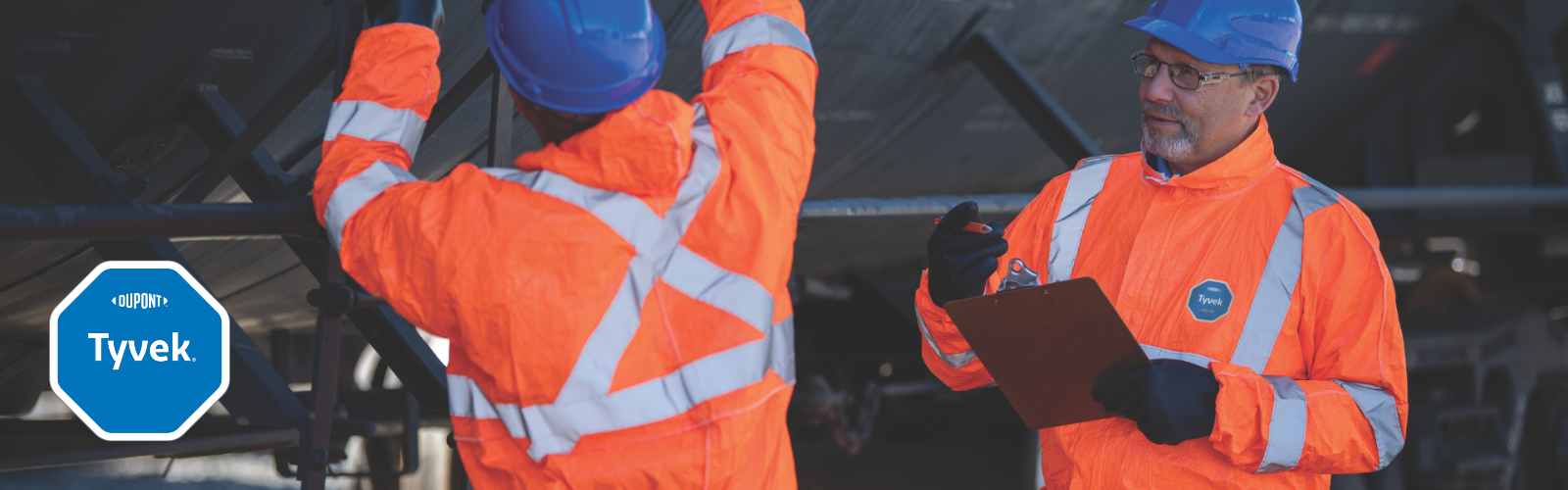
Tyvek®: What It Is?
Tyvek® is a nonwoven material made from high-density polyethylene (HDPE) fibers bonded using heat and pressure. Lightweight, breathable, and resistant to water and particles, it is widely used in protective clothing, construction, and industrial environments. While it provides excellent barrier protection, it is not designed for flame or high-heat exposure.
What Is Tyvek?
Tyvek is a synthetic nonwoven material manufactured from continuous high-density polyethylene (HDPE) fibers.
According to DuPont technical documentation, the fibers are bonded using heat and pressure rather than weaving, creating a uniform and highly durable structure.
Designed and developed by DuPont, Tyvek is a bonded material that is produced from high-density polyethylene fibers. It is a bonded material made from high-density polyethylene fibers. The fibers are compressed by a thermal process. This results in a more resistant product than paper, and a more affordable and versatile solution than fabric.
Even if it looks and feels like paper, Tyvek has special properties that make this material unique. Light, more flexible than paper, practically tear-resistant, resistant to water, most solvents, acids and bases, it is also non-toxic and can be recycled.What Is Tyvek Made Of?
Tyvek is made from high-density polyethylene (HDPE), a recyclable polymer also used in plastic containers and industrial packaging.
The spunbond manufacturing process produces continuous fibers that create strength without adding weight.
How Is Tyvek Manufactured?
The production process includes:
- Melting high-density polyethylene
- Spinning continuous filaments
- Thermal bonding under pressure
- Formation of a nonwoven sheet
What Is Tyvek Used For?
Tyvek is used in many fields, including safety, but also as an air barrier in the construction industry, product packaging and even in banknote manufacture :
- Protective coveralls and PPE
- Cleanrooms and laboratories
- Pharmaceutical manufacturing
- Construction air barriers
- Packaging applications
- Industrial maintenance environments
In occupational safety, Tyvek garments help protect against:
- Dust and fine particles
- Paint overspray
- Lead and asbestos exposure
- Mold remediation
- Certain biological contaminants
Reference: OSHA PPE Guidance / DuPont Protection Solutions
Undeniable Advantages
With Tyvek, DuPont has taken the field of protection and safety to a whole new level. Click here to learn more about Dupont.
LIGHTWEIGHT: This material is incredibly light and flexible. When used as protective clothing, it is very comfortable and not bulky.
SIMILAR TO PAPER: Tyvek looks like paper, but is much stronger. The product combines the performance of paper, film and fabric, making it ideal for many types of applications.
WATER RESISTANT: When wet, paper absorbs moisture and crumbles. Is Tyvek Waterproof? Tyvek, on the other hand, repels water. It has excellent rot and mildew resistance and resists soiling and staining.
BREATHABLE: Tyvek is a waterproof and breathable membrane that allows moisture, water vapor and sweat to escape.
RECYCABLE: Made of high-density polyethylene fibers (HDPE), Tyvek is 100% recyclable, just like plastic bottles.

Durability and Resistance
This product is designed to perform well in difficult, robust and extreme conditions. Ideal for applications where durability and resistance are of primary importance, Tyvek can withstand tears, punctures, abrasion, but also rough handling during bending and repeated flexing, all without being damaged.
It’s resistant to water, heat, cold, UV and chemicals. Tyvek is unaffected by most acids, bases and salts. Even if it’s not fire-resistant, Tyvek can withstand temperatures ranging from -70°C to 118°C.
The ideal personal protective equipment
At SPI, safety is our top priority and we are proud to offer protective clothing made from Tyvek, such as boot covers and protective pants and shirts. Comfortable and durable, they provide a protective barrier against paint, lead, asbestos, mold, anthrax, avian influenza and other threats or chemical hazards. The suits are tested against hundreds of chemicals to give you the protection you need.
Tyvek products are also ideal for clean rooms, laboratories, the pharmaceutical industry and hazardous environments. They offer you better protection against contamination.
No one should have to take their work home, especially those in dangerous jobs with contamination risks. Whatever your occupation, enjoy the durability, comfort and protection you need to tackle the toughest jobs with confidence.
Shop all of our Tyvek offering by clicking here.
Want to know how DuPont impacts your health in addition to the planet's? Check out the document below 👇

